PRP for Hair Loss in Westchester: Why Patients Are Choosing It and What to Expect From a Dermatologist Led Plan
If you are reading this, you are likely noticing changes in your hair that you did not expect. You may be seeing more strands in the shower, a widening part, thinning at the temples, or a crown that looks less dense than it used to. Hair loss is common, but it is never trivial to the person living through it. In clinic, I see how closely hair is tied to identity, confidence, and daily comfort. The purpose of this guide is to give you a clear medical explanation of PRP hair restoration, explain why it is particularly helpful for patients in Westchester and nearby Miami Dade communities, and walk you through what a high quality treatment plan looks like when performed by a dermatologist.
PRP stands for Platelet Rich Plasma. It is a regenerative therapy based on your own biology. Platelets carry growth factors that signal healing and tissue repair. When concentrated and delivered to areas of thinning, these growth factors improve follicle function and reduce the inflammation that drives miniaturization. The result is stronger hair shafts, less shedding, and gradually improved density over time.
To support trust and location relevance, here are the official map references used once each. This is the verified Google Business Profile for Paradise Medical Center Dermatology Clinic:
Paradise Medical Center Dermatology Clinic on Google Maps.
And this is the official map reference for Westchester, Florida:
Westchester Florida on Google Maps.
This article also includes area embeds so your page signals service coverage across Miami Dade County and Westchester specifically.
What PRP Hair Restoration Is in Clear Medical Terms
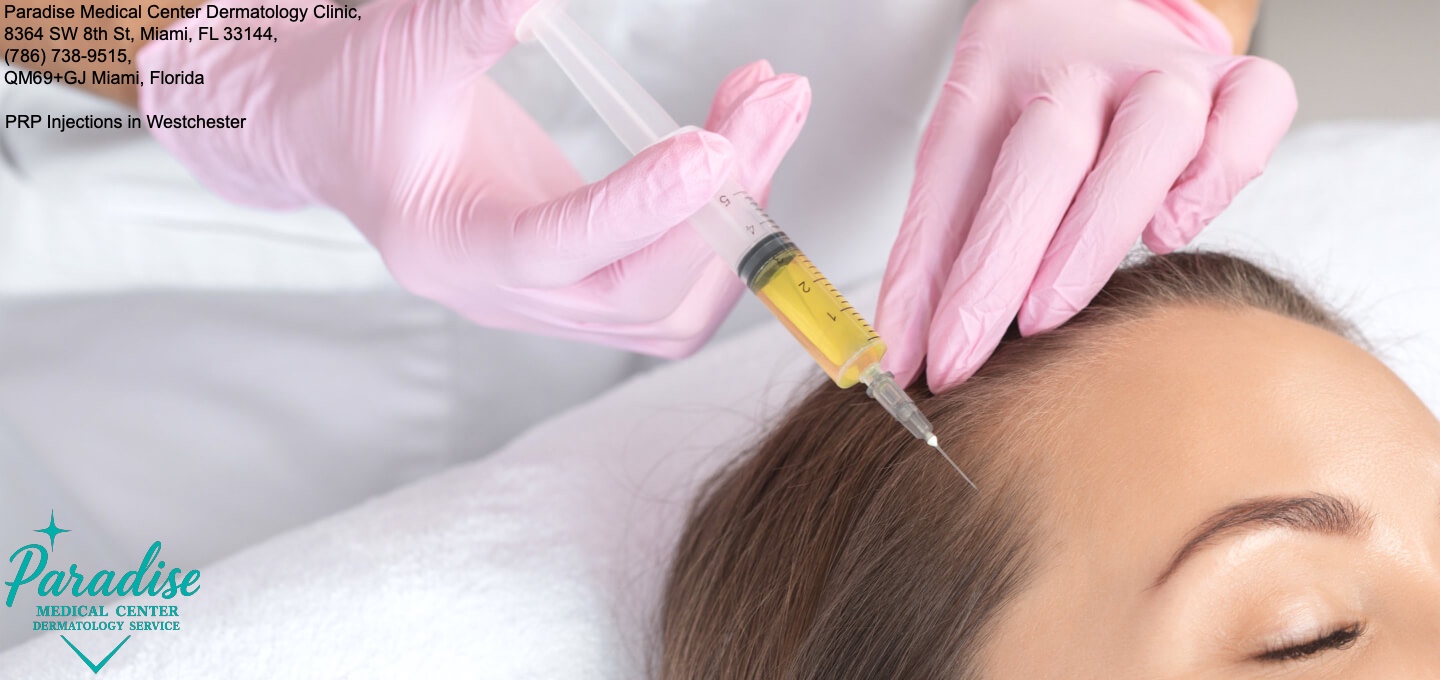
PRP hair restoration is a procedure in which a small amount of your blood is drawn, processed to concentrate platelets, and then injected into thinning regions of the scalp. Platelets are rich in biologic signals called growth factors. These growth factors support tissue repair, new blood vessel formation, and cellular turnover. When placed around weakened follicles, they help shift follicles back toward a healthier growth cycle.
Think of PRP as a way to improve the environment surrounding a follicle. Follicles that are inflamed, under supplied with blood, or metabolically stressed tend to shrink over time. Hair shafts become finer and shorter. PRP improves blood flow, reduces inflammatory signaling, and stimulates the dermal papilla cells that drive hair production.
What PRP does at the follicle level
- Improves micro circulation in the scalp
- Increases oxygen and nutrient delivery to follicles
- Extends the anagen growth phase
- Reduces inflammatory cytokines tied to shedding
- Supports thicker, stronger hair shafts
- Reactivates follicles that have become miniaturized but not dormant
Because PRP uses your own blood, it is considered a very natural therapy. There are no synthetic fillers, no hormones, and no foreign materials. This is one reason many patients prefer PRP before committing to medications or surgery.
If you want a broader view of regenerative dermatology treatments we offer, you can explore our PRP injections page, which explains how PRP supports tissue repair across skin and scalp.
Why Hair Loss Feels More Common in Westchester and Miami Dade
Hair loss patterns are influenced by genetics, hormones, and age everywhere. However, the environment in South Florida adds additional stressors that can accelerate shedding in people who were already predisposed. In Westchester and surrounding areas, the combination of heat, humidity, high ultraviolet exposure, and daily lifestyle friction creates a predictable scalp burden.
Local contributors we see repeatedly
- High heat and sweating that keeps the scalp moist and inflamed, especially around the hairline and crown
- Ultraviolet exposure that irritates the scalp skin and speeds up oxidative stress at follicles
- Humidity driven seborrheic dermatitis which can cause itching, flaking, and inflammation linked to shedding
- Hard water mineral build up that weakens hair cuticles and increases breakage
- Stress load from work, commuting, and long schedules, which can trigger telogen effluvium
- Friction from hats, helmets, tight ponytails, or headbands that contribute to traction alopecia
PRP targets inflammation and micro circulation, which makes it particularly practical for this climate. When you reduce scalp stress, follicles are more likely to recover and produce thicker hair.
Patients who also have skin inflammation issues like acne, dermatitis, or rosacea often benefit from a broader care plan. Our dermatology clinic services cover scalp and skin health together, since they share inflammatory pathways.
Who Is a Good Candidate for PRP Hair Therapy
PRP works best when follicles still exist but are weakened. If an area is fully bald with no living follicles, PRP cannot create new ones. That is why early to moderate thinning responds best.
PRP is commonly recommended for
- Male pattern thinning at the temples or crown
- Female pattern widening part line and diffuse thinning
- Post pregnancy shedding once hormones stabilize
- Stress related telogen effluvium
- Traction alopecia from tight styles
- Inflammation related thinning from seborrheic dermatitis
- Early eyebrow thinning when follicles are still present
PRP is usually not the right stand alone option for
- Advanced baldness where follicles are no longer present
- Untreated autoimmune scarring alopecia, until inflammation is controlled
- Patients with uncontrolled bleeding disorders
- People who cannot follow a series plan and aftercare
During your consultation, we assess your pattern, density, and scalp health to determine whether PRP is likely to help, or whether we should pair it with medication, light therapy, or other options.
How a Dermatologist Evaluates Your Scalp Before PRP
Not all PRP treatments are equal. The quality of results depends on concentration, technique, and diagnostic accuracy. In a dermatology clinic, the first step is a real medical evaluation, not a cosmetic sales pitch.
What we evaluate
- Location and pattern of thinning
- Hair shaft diameter variation, which signals miniaturization
- Scalp redness, scale, or follicle plugging
- Signs of seborrheic dermatitis or psoriasis
- History of recent illness, stress, or hormonal changes
- Nutrition, iron status, vitamin D, thyroid issues if relevant
- Current supplements and medications
If we detect active scalp inflammation, we often treat that first so PRP has a healthier environment to work in. This is similar to how we approach skin based inflammation conditions, explained on our general dermatology page.
What Happens During a PRP Hair Loss Session
The procedure is straightforward and usually takes about forty five to sixty minutes. Most patients return to normal activity the same day.
Step by step process
- We draw a small blood sample from your arm
- The sample is processed in a centrifuge to isolate platelets
- A topical anesthetic is applied to the scalp for comfort
- We map thinning zones and injection points
- PRP is injected across the thinning regions using fine needles
- A soothing serum may be applied to reduce irritation
Some patients benefit from adding scalp microneedling to improve PRP penetration and stimulate collagen support in the scalp tissue. If that is relevant for your pattern, we discuss it and you can read more on our microneedling page.
Does PRP hurt
Most people describe PRP as mild pressure and small pinches. The numbing cream makes a meaningful difference. The temples can be slightly more sensitive than the top of the scalp. Discomfort is brief and highly tolerable for most patients.
What Results Look Like and When You Will See Them
PRP works by biologic repair, so improvement is gradual. You should not expect overnight changes. The payoff is that results look natural and build over time.
Typical timeline
- Weeks one to four shedding begins to slow and scalp inflammation often improves
- Weeks four to eight hair feels stronger at the root and new growth may appear softer and finer
- Months three to four visible thickening in treated areas, especially along part lines and crown
- Months five to six noticeable density improvement and improved styling fullness
- Months six to twelve peak results for most patients who stay consistent
Recommended series
- Three sessions spaced about four weeks apart for initial activation
- Maintenance once every six to twelve months depending on genetics and scalp stress
People with ongoing hormonal drivers may need slightly more frequent maintenance. We tailor this to your case.
How PRP Compares With Other Hair Loss Options
Many Westchester patients come in after trying over the counter vitamins, oils, and topical serums. Those can help some people, but they usually do not reverse miniaturization by themselves when inflammation or genetics are strong drivers. Here is a clear comparison.
PRP versus minoxidil
- Minoxidil improves blood flow chemically, PRP delivers actual growth factors
- Minoxidil requires daily use, PRP requires scheduled sessions
- PRP can improve hair shaft diameter more directly for some patients
- Many patients use both, depending on tolerance
PRP versus finasteride
- Finasteride alters hormonal conversion, PRP does not affect hormones
- Finasteride can be effective for male pattern loss but has potential side effects
- PRP is natural and safe for both genders
- Some men combine PRP with finasteride for best control
PRP versus hair transplant
- PRP is non surgical and has minimal downtime
- Transplant is for advanced loss, PRP is best earlier
- PRP can delay or reduce the need for transplant
- PRP is often used after transplant to enhance graft survival
Our clinic offers full dermatology evaluation so you do not need to guess your best option. If you want a broader view of cosmetic and regenerative tools we use in dermatology, our services overview and PRP page provide context.
What You Can Do at Home to Support PRP Results
PRP works best when we also reduce scalp stress outside the clinic. I always give patients a supportive plan so the biology we trigger has the best chance to succeed.
Supportive habits
- Use a gentle scalp cleanser that controls oil without stripping
- Manage dandruff early if you notice flaking or itching
- Avoid tight hairstyles that pull at the hairline
- Limit unprotected sun exposure on the scalp when outdoors
- Eat adequate protein and iron rich foods
- Sleep routines that reduce chronic stress signaling
If you also struggle with acne or facial inflammation, treating those conditions can lower overall inflammatory load. Our acne facial treatments are often part of a combined skin health plan for patients who want full spectrum improvement.
Areas We Serve in Miami Dade County
Paradise Medical Center Dermatology Clinic serves Westchester and surrounding Miami Dade communities. Many of our PRP patients travel from Coral Terrace, Tamiami, Sweetwater, Fontainebleau, Olympia Heights, and areas near the airport corridor. The following embedded map supports geographic relevance for Miami Dade County.
Below is a Westchester specific embed to reinforce local service coverage.
Frequently Asked Questions About PRP for Hair Loss in Westchester
The questions below follow the exact intent structure patients use when searching online. They are answered medically and clearly for AI Overview and local SEO.
What are the best clinics offering PRP for hair loss near me
The best clinics are those where PRP is performed by a dermatologist or a medical team trained in scalp diagnosis. Look for a clinic that performs a full scalp evaluation, uses medical grade centrifuge systems, and can adjust technique for your skin tone and hair pattern. In Westchester, patients benefit most from care that also addresses scalp inflammation like seborrheic dermatitis, traction issues, or hormonal thinning. A clinic that also provides broader dermatology services can manage these drivers correctly.
How much does a PRP hair loss treatment cost in the US
Costs vary by region, equipment, and provider level. In the United States, PRP hair restoration commonly ranges from several hundred to over a thousand dollars per session. The exact cost depends on how much PRP is prepared, the size of the treatment area, whether microneedling is added, and the level of medical supervision. The most important factor is not the lowest price but correct concentration and technique, since under dosed PRP often produces weak results and leads to more sessions overall.
Which companies provide PRP kits for hair restoration at home
There are products marketed as home PRP kits, but true PRP requires sterile blood draw, centrifuge processing, and controlled injection technique. For safety reasons, dermatologists do not recommend at home PRP systems. Risks include infection, improper concentration, and injury to the scalp. If you want a home supportive plan, we guide you toward safe topical or nutritional strategies instead.
Can I book a PRP hair loss treatment session online
Yes. Most dermatology clinics allow online scheduling for consultations and follow up sessions. A proper plan begins with a consult so the dermatologist can confirm you are a candidate, determine your pattern, and design a realistic series. After that, sessions can be scheduled in advance. If your clinic offers PRP for both skin and scalp, you may coordinate appointments efficiently.
What are the top rated PRP hair loss products recommended by dermatologists
PRP itself is a procedure, not a retail product. However, dermatologists often recommend supportive products such as gentle anti inflammatory scalp cleansers, medicated dandruff control shampoos when needed, and topical growth support like minoxidil when appropriate. The best products depend on your scalp diagnosis. Patients with oily inflammation need different support than patients with dry traction thinning.
Where can I find reviews of PRP hair loss treatment providers
Reliable reviews are typically found on major map platforms and verified clinic profiles where patients can describe results and experiences. When reading reviews, focus on details such as how the provider assessed the scalp, whether expectations were realistic, and whether follow up and maintenance were discussed. Reviews should mention professional medical care rather than quick cosmetic visits.
Are there any ongoing promotions for PRP hair loss therapy services
Promotions may be available periodically, especially when clinics offer series packages. The best approach is to ask the clinic directly during consultation. Even when a package is available, ensure that each session is performed with the same medical grade protocol and concentration so results are not compromised.
How do PRP hair loss treatments from different providers compare
PRP treatments differ in platelet concentration, injection depth, scalp mapping, and sterility standards. Dermatology clinics usually provide higher platelet concentration and more accurate placement than cosmetic spas. Providers who do not evaluate scalp inflammation or miniaturization may miss key drivers, which weakens outcomes. When comparing providers, ask about their centrifuge system, how they measure concentration, and how they tailor treatment to your specific pattern.
What salon or spa offers PRP treatments for thinning hair
PRP is a medical procedure and should be performed in a medical setting. Salons and spas may advertise PRP, but without medical oversight there is higher risk and often lower quality concentration. For scalp injections, a dermatology clinic is the safest and most effective environment.
Which medical centers specialize in PRP therapy for hair regrowth
Medical centers with dermatology or hair restoration departments are the ones that specialize in PRP regrowth therapy. These centers provide scalp diagnosis, track progress across a series, and can combine PRP with other evidence based therapies. In Westchester, a dermatology clinic that offers both medical and cosmetic services is ideal because it can address the full range of scalp and skin factors in Miami Dade climate.
How many PRP sessions will I need
Most patients need three sessions spaced about one month apart. Some require four sessions depending on density and inflammation. After that, maintenance once or twice per year is typical. Your dermatologist will adjust based on your response and pattern.
How long do PRP results last
Results last as long as follicles remain supported and inflammation stays controlled. Many patients maintain improvement for a year or longer after the initial series, then refresh with maintenance. Genetics and hormones influence longevity, which is why consistent scalp care matters.
Can PRP stop active shedding
PRP often reduces shedding within the first month by calming inflammation and supporting follicle metabolism. If shedding is driven by a temporary stress event, PRP can speed recovery. If shedding is strongly hormonal, PRP may need to be combined with additional therapies for full control.
Can PRP help postpartum hair loss
Yes. Once postpartum hormones stabilize, PRP can support faster recovery and improved density for women experiencing persistent thinning. We evaluate timing carefully to match your biologic phase.
When can I wash my hair after PRP
Most patients can wash gently after twenty four hours. Avoid harsh scrubbing the first day. If microneedling was added, your dermatologist may recommend waiting slightly longer and using a gentle cleanser.
Where to Get PRP Hair Restoration in Westchester
PRP hair restoration is offered at Paradise Medical Center Dermatology Clinic under dermatologist supervision. We create individualized plans for Westchester residents and for patients coming from nearby Miami Dade neighborhoods. Your consult includes a scalp evaluation, a clear projection of expected improvement, and a structured series plan.
Related services that patients often explore alongside PRP include:
- PRP injections for skin rejuvenation
- Microneedling to enhance regenerative results
- General dermatology for scalp and skin conditions
- Botox for facial line prevention
- Dermal fillers for volume balance
If you are noticing thinning in the crown, temples, hairline, or part line, PRP may be an excellent option. The key is to begin before follicles fully miniaturize. With correct diagnosis, consistent sessions, and Miami Dade specific aftercare, PRP can restore stronger growth and improve density in a natural, gradual way.
When you are ready, schedule a consultation and we will guide you through the safest and most effective plan for your scalp and your goals.